By the Training Puppies editorial team · Updated
Short answer
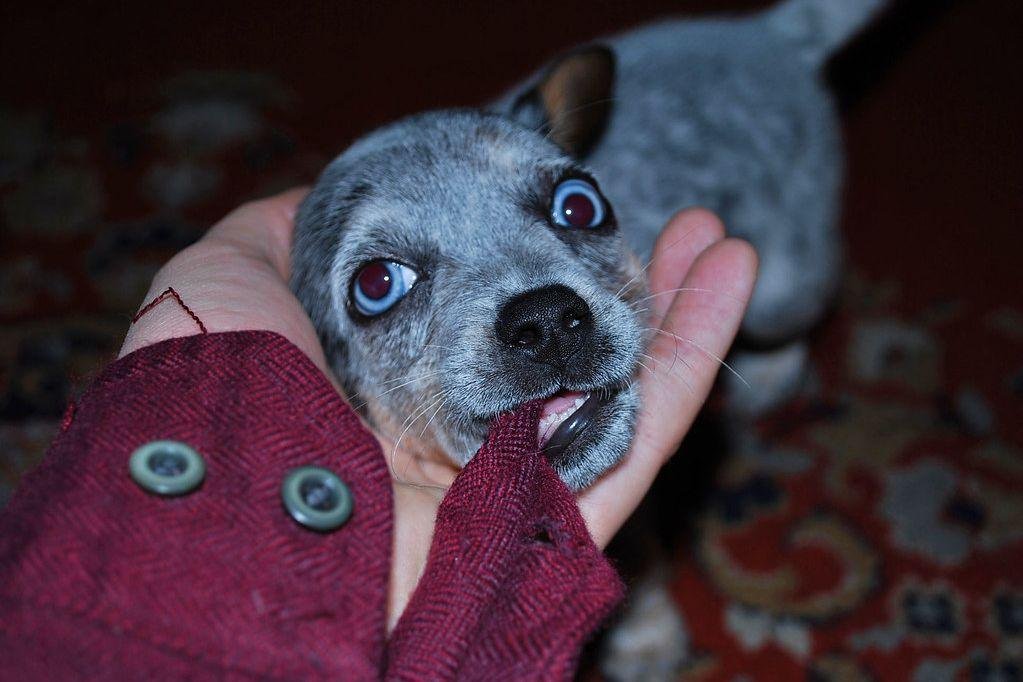
Mouthing, play biting and chewing are common in young puppies. Give your puppy appropriate things to chew, calmly end play when teeth touch skin and offer a toy instead, manage what your puppy can reach, and never use physical punishment.[1][2][3][4]
This guide fits you if your puppy mouths or bites hands and clothes during play, or chews things they should not.
Look elsewhere if your puppy’s biting seems fearful or angry rather than playful, keeps getting worse, or you cannot manage it safely. Ask a veterinarian first.[1][3][5] If your puppy growls or snaps when you come near their food, toys or chews, see Resource Guarding in Puppies.
What is normal, and why puppies mouth and chew
Puppies spend a lot of time playing, chewing and investigating, and all of it involves their mouths.[1][3] Play biting is generally a form of social play rather than a sign of dominance, and puppies learn from their littermates when a bite is too hard.[2] Play-motivated bites still hurt, and because all dogs can bite at some time, teaching a puppy to be gentle matters for everyone’s safety.[2]
A playful puppy usually has a relaxed body and face.[1] Normal does not mean it will fix itself: failing to channel the behavior into a suitable outlet, such as a toy, may mean it continues.[3] Strategies also fail if a puppy’s social, exploratory and energy needs are not being met, so make sure your puppy gets enough play, exercise and attention.[2]
What to do in the moment
These steps work together. Use the same method every time, and make sure everyone in the household does too.[3]
-
1
-
2
-
3
Act right away
Respond immediately, so your puppy can tell the difference between wanted and unwanted behavior.[3]
-
4
-
5
Take a break if your puppy keeps coming back
If your puppy persists, walk away or leave the room, using a door or gate if needed.[1][2][3]
Example One source suggests ignoring your puppy for 30 to 60 seconds after you walk away,[1] while another says to walk out within 1 to 2 seconds of the bite.[3]
-
6
Interrupt rising excitement
If your puppy is getting more and more aroused, stop play for a few seconds, then give a toy, before they reach the point where nipping starts.[3]
Set up the environment
Offer plenty of chews. Provide plenty of interesting and new toys, so your puppy has something better to gnaw than you or your clothes.[1] Rotating safe chew toys and feeding from puzzle toys can help.[6]
Manage access. Remove tempting items from reach and supervise constantly, so your puppy cannot get to things they should not chew.[6] The Puppy Proofing guide covers which hazards to move out of reach. When you cannot supervise, confinement with food-stuffed toys and chews after a play session is one suggestion.[2]
Caution
Supervise chewing, because no toy is completely safe. One veterinary hospital reports that rawhide, pigs’ ears, bully sticks, bones, some synthetic toys and tennis balls have caused blockages and other injuries, and that veterinary dentists advise not letting a dog chew anything that will not bend.[6]
Teething and chewing
Puppies learn about the world through how things feel, and chewing seems to ease the discomfort assumed to come with teething.[6] Veterinary sources give different timing for the arrival of adult teeth, so the table shows what each reports.[6][7]
| Source | Adult teeth begin to appear | All adult teeth present |
|---|---|---|
| VCA Animal Hospitals | Around 12 weeks | By 6 months |
| Merck Veterinary Manual | Around 4 to 5 months | By 7 months |
Puppies vary, so treat these as ranges rather than deadlines. One veterinary hospital says excessive chewing seems to ease around 18 months of age but continues to some degree throughout life.[6]
What not to do
Do not use physical punishment. Hitting, slapping, flicking the nose, scruff shaking, pinching lips or putting fingers down a puppy’s throat will not solve nipping. Slapping or hitting for playful mouthing can make puppies bite harder, and punishment can encourage fear or aggressive behavior.[1][3] AVSAB recommends only reward-based methods for all dog training and lists methods such as shouting, alpha rolls and leash jerks as aversive.[4]
Do not encourage rough hand play. Waving fingers or toes in a puppy’s face encourages them to play with you, and jerking your hands away when they mouth can make them jump forward and grab.[1] UC Davis advises avoiding wrestling and rough play with a puppy that is prone to nipping.[3] Sources differ on tug-of-war: UC Davis says to avoid it with a nippy puppy, while ASPCA and VCA allow it with rules, such as stopping the game whenever teeth touch skin.[1][2][3]
When it is not working
Your puppy bites harder when you pull away
Your puppy keeps coming back for your hands
Your puppy chews furniture or shoes
When to ask a professional
Most mouthing and chewing is normal, but this guide cannot assess your individual puppy. Ask a veterinarian first if your puppy seems unwell or in pain, their behavior changes noticeably, or you are concerned about their teeth or mouth, because medical problems can affect behavior.[5][6] If biting seems fearful or angry rather than playful, keeps getting worse, injures someone, or you cannot manage it safely, ask a veterinarian, who may refer you to a veterinary behaviorist or a certified applied animal behaviorist.[1][3][5] Choose a professional who uses reward-based methods.[4][5]
Sources
- Mouthing, Nipping and Biting in Puppies (opens another site)ASPCA. Accessed 6 October 2026
- Play Biting in Puppies (opens another site)VCA Animal Hospitals. Accessed 6 October 2026
- Your Nipping Puppy (opens another site)UC Davis School of Veterinary Medicine, Clinical Animal Behavior Service (handout written by veterinary students). Accessed 6 October 2026
- Why You Need To Reward Your Dog in Training, According to the Experts (opens another site)American Veterinary Society of Animal Behavior (AVSAB). Accessed 6 October 2026
- Selecting a Behavior Consultant (opens another site)American Veterinary Society of Animal Behavior (AVSAB). Accessed 6 October 2026
- Teeth, Teething and Chewing in Puppies (opens another site)VCA Animal Hospitals. Accessed 6 October 2026
- Dental Development of Dogs (opens another site)Merck Veterinary Manual (Dog Owners), Merck & Co., Inc. Accessed 6 October 2026
Where to go next
- If you want a reward-based way to teach first everyday cues, including leave it and drop it, the basic obedience guide covers them with short, calm practice.Puppy Basic Obedience →
- If your puppy bites or grabs the leash on walks, the leash training guide covers what to check and what to try.Puppy Leash Training →